Holding On Through Blooms: Using Flowers to Navigate Grief with Intention
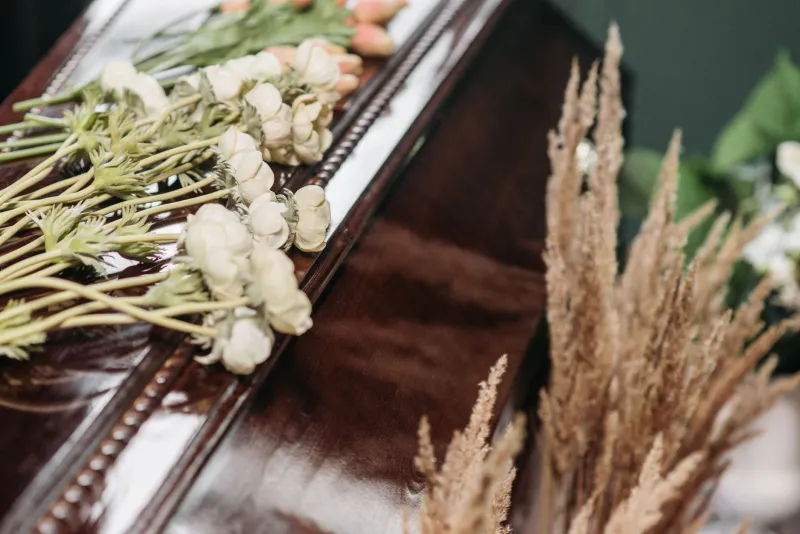
There's a moment at nearly every American funeral where someone stands next to a wall of identical white lilies and feels absolutely nothing. Not because they aren't grieving — they're devastated — but because the flowers don't mean anything. They're just flowers. Purchased in bulk, delivered on a schedule, arranged by someone who never met the person being mourned.
That's not a criticism of sympathy florals. It's an observation about what happens when we outsource meaning.
At Mis Decor Blooms, we believe flowers are one of the most honest languages we have for the things we can't quite say out loud. And grief — messy, nonlinear, deeply personal grief — deserves more than a standard arrangement with a printed condolence card. It deserves intention.
This is about how to give it that.
Why Flowers and Grief Are So Deeply Connected
Long before Hallmark, before the modern funeral industry, before sympathy card sections at CVS, humans were placing flowers with their dead. Ancient Egyptian tombs contained flower garlands. Victorian mourning culture turned floral symbolism into an entire vocabulary. Indigenous traditions across North America have long incorporated botanical elements into death rituals.
This isn't coincidence. Flowers are alive, and then they're not. They're beautiful in a way that's inseparable from their impermanence. Bringing them into a space of loss does something instinctive — it acknowledges that this person mattered, that beauty existed here, that something is ending.
The problem is that we've largely reduced this to a transaction. You order online, you check the box, you move on. The ritual is gone.
Bringing it back doesn't require a florist's degree. It just requires slowing down.
Building a Personal Memorial Display
A memorial display is different from a sympathy arrangement. It's not for the room — it's for you, or for the family. It's built around meaning rather than aesthetics.
Start by asking: what did this person love? Not in a generic way, but specifically. Did they grow tomatoes every summer? Were they obsessed with a particular color? Did they always have wildflowers on the kitchen table, or were they more of a roses-from-the-grocery-store person?
Let those details lead you to the flowers.
A few approaches that work beautifully:
The Memory Garden Arrangement — Pull together blooms that reflect specific memories. If your grandmother grew zinnias, include zinnias. If your dad always brought sunflowers home on Fridays, put sunflowers at the center. These aren't decorative choices; they're anchors.
The Favorite Color Palette — Sometimes the most personal thing you can do is simply use their favorite color. An all-yellow arrangement for someone who wore yellow every chance they got is more meaningful than the most technically perfect bouquet.
The Birthdate Bloom — Every birth month has a corresponding flower. Incorporating that bloom — carnations for January, daffodils for March, marigolds for October — adds a layer of personal symbolism that most people will feel even if they can't name why.
Place the display somewhere that matters. Not the formal living room where nobody sits. The kitchen counter. The bedside table. Somewhere you'll actually see it.
Dried Arrangements as Lasting Memorials
Fresh flowers are honest about impermanence, which is part of their power. But sometimes you need something that stays.
Dried floral arrangements — done thoughtfully — can become permanent memorials that sit on a shelf, hang on a wall, or fill a shadow box alongside a photograph. They're not sad. They're actually quite beautiful, especially when they're built around flowers that carry personal significance.
To dry flowers from a funeral arrangement or a meaningful bouquet:
- Pull the stems as soon as possible — ideally within the first day or two, before wilting sets in.
- Bundle them loosely with a rubber band and hang them upside down in a dry, dark spot. A closet works perfectly.
- Wait two to three weeks. Thicker blooms like roses and peonies take longer; delicate ones like lavender dry quickly.
- Once dry, arrange them gently. They're fragile, but they last for years if kept out of direct sunlight and humidity.
You can also press individual blooms between the pages of a heavy book and frame them. A single pressed rose from a funeral arrangement, framed simply, is one of the most quietly powerful memorial objects you can keep.
Navigating Floral Gifting During Someone Else's Loss
If you're the one sending flowers rather than receiving them, this section is for you.
The standard move — ordering a pre-made arrangement from a delivery service — isn't wrong, but it's often forgettable. If you want the flowers to actually land, here's what helps:
Ask before you send. Especially in the immediate days after a death, some families are overwhelmed with arrangements and have nowhere to put them. A quick text — I'd love to send flowers, is that helpful right now, or would another time be better? — is more thoughtful than any bouquet.
Include a note that explains the flowers. If you chose sunflowers because you and the deceased once got lost on a road trip through Kansas sunflower fields, say that. The story is the gift. The flowers are just the delivery mechanism.
Think beyond the funeral. The first week after a loss is often flooded with attention. Weeks two, three, and four are when the silence sets in. Sending flowers six weeks after a loss — just because you're thinking of them — is one of the kindest things you can do.
Making Space for the Ritual
Grief doesn't have a timeline, and floral rituals don't have to either. Some people find it helpful to mark anniversaries with a specific bloom. Others build a small seasonal arrangement as a way of checking in with themselves around the anniversary of a loss.
None of this has to be elaborate. A single stem in a glass of water, placed somewhere quiet, with a moment of intentional thought — that's enough. That's actually the whole thing.
At Mis Decor Blooms, we think the most meaningful arrangements are the ones that hold something real. Grief is real. The people we've lost were real. The least our flowers can do is show up with the same honesty.